

About Us
Our Capital Fund Journey
Established in 2009, Capital Fund has been a prominent real estate alternative lending industry player for over a decade. With a core focus on providing short-term, asset-backed financing to real estate investors, builders, and developers, Capital Fund has successfully funded over $6 billion in loans to date. Through its rigorous underwriting process, with a focus on the asset, and seasoned expertise, the fund has protected our investors' principal $s invested while consistently generating attractive returns for its investors while offering a crucial lifeline to borrowers who may not have access to traditional financing channels.
Reach out to our team today to learn more!
Capital Fund Portfolio
at a Glance
$845m AUM
~1550 Loans
~900 Investor Accounts
~65% LTV Portfolio Average
Recent Deals

TOWNHOME FLIP
Phoenix Metro | Mesa, AZ
Purchase Price: $137,000
Rehab Budget: $22,000
Loan Amount: $115,000
Sales Price: $245,000
Actual LTV: 46.94%

SINGLE FAMILY FLIP
North Boulder | Longmont, CO
Purchase Price: $185,000
Rehab Budget: $75,000
Loan Amount: $166,000
Sales Price: $436,000
Actual LTV: 38.07%
our strategy
- We lend money to real estate investors, builders, and developers
- Asset Based Lending Model
- We underwrite the asset/project vs. underwriting the borrower
- No credit check/tax returns/financial statements required
- Loan must be secured by Non-Owner Occupied SFR/Investment/Commercial RE
- Down Payments Required
- We adjusted our risk with larger down payments
- Short Term Loans (6-36 months)
- All loans require monthly interest only payments
- 1st position loans with rare exceptions
- Lender Friendly States
- Deed of Trust States Only
- Quick Foreclosure Process
- Markets with Strong Economies
- Under Supplied Housing
- Focused on lending in Core MSAs
- Our borrowers add finished inventory to under-supplied markets
Risk mitigation measures focused on principal preservation.
Internal Measures
- CF Ownership Investment
- Software Development
- Diversification
- Borrower Equity
- Market/Demographics
- Cash Flow Model
- Systems & Procedures
External Measures
- AUDITS:
- CF1 Annual Financial
- CF2 Annual Financial
- CF1 Periodic AZDFI
- CF1 Annual Operational
- WAB Oversight
- AZDFI Oversight
Our Team
Our Leadership team has over 100 years of Real Estate Experience
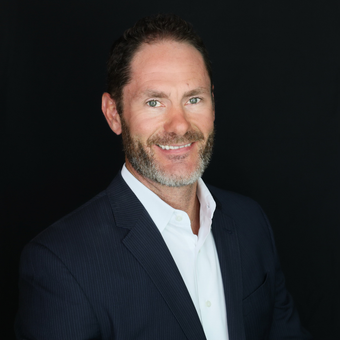
Noah Brocious
President
Noah has been with Capital Fund I, LLC (CFI) since 2009 and is a principal and the President of CFI. He is also a licensed Mortgage Loan Originator and the Responsible Individual for the company. He started his career in real estate in 2004 and has been in the industry ever since having experience in residential and commercial development. Noah oversees the day to day operations of the company and is responsible for direction of the company with input from the other partners.
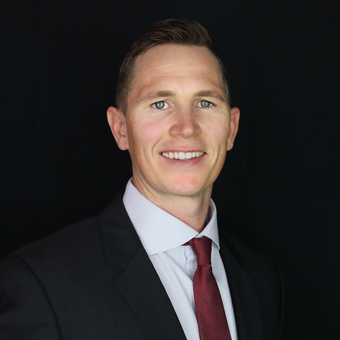
Kevin Highmark
Chief Operating Officer
Kevin is a Principal and the Chief Operating Officer of Capital Fund. Kevin was raised in Arizona, completing both his Undergraduate and MBA programs at the WP Carey School of Business at Arizona State. Kevin oversees the day to day operation and works closely with Noah in Fundraising and Investor Relations.
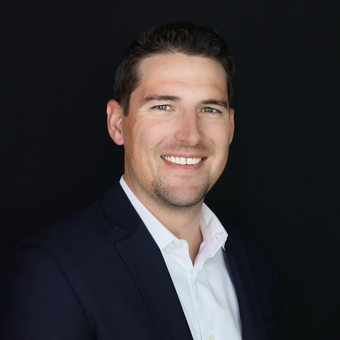
Tyler Larson
Chief Investment Officer
Tyler is a principal and the Chief Investment Officer as well as an investor in CF2. Tyler graduated with a bachelor’s degree in both Finance and Marketing from Northern Arizona University. The Asset Management Department is responsible for the oversight of risk evaluation on all submitted loans as well as the in-house management of Commercial and Construction draws. Tyler works closely with Noah and the other partners in influencing the direction of the company.

Justin Malabag
Investor Relations Analyst
Justin is an Investor Relations Analyst at Capital Fund 1, combining his background in corporate finance with a passion for helping clients navigate their investment opportunities. He has a solid foundation in the self-directed IRA industry, focusing on both alternative investments and traditional markets during his time at Morgan Stanley.
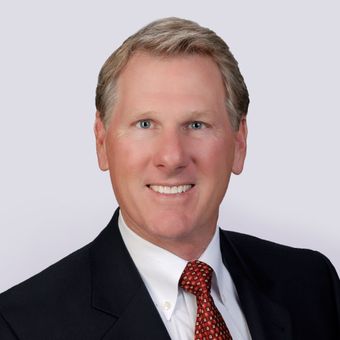
Michael Anderson
Principal
Michael Anderson is the Founder, CEO, and a principal of CFI and a substantial investor in Capital Fund II, LLC (CF2). He has worked in the real estate development, brokerage, and acquisition industry for over 35 years. Mike obtained his Real Estate License in 1978, his Real Estate Broker License in 1983, and his Banking License in 2010. Mike and his team bring over 75 years of real estate experience to the table with an impeccable track record.

Dean Bloxom
Principal
Dean Bloxom is a principal in CFI and a substantial investor in CF2 and has worked in the mortgage industry for over 30 years. Dean is the current Chief Strategic Partnership Officer of Loan Depot, the 3rd largest mortgage company in the US after their merger with iMortgage, the company that he founded. Prior to iMortgage, Dean was the President of UDC Mortgage where he oversaw the entire mortgage operation. During his career, Dean has held executive management positions at some of the nation’s largest and well respected companies, overseeing billions in production volume.
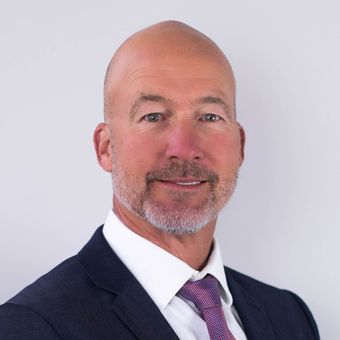
Mike Lofton
Principal
Mike Lofton is a principal of CFI and a substantial investor in CF2 and has worked in the real estate and construction industry for over 30 years. He is also the founder and CEO of Loftco. Mike has been primarily involved in new homebuilding, real estate acquisitions and development. Mike is the former chapter President of the Entrepreneurs Organization and has been a partner in a significant number of privately-equity investments in various businesses located.

Buddy Satterfield
Principal
Buddy Satterfield is principal in CFI and a substantial investor in CF2 and the former President of Shea Homes Arizona, one of the largest homebuilders in the state. Involved in homebuilding since 1978, he is the past President of the Home Builders Association of Central Arizona (HBACA). He has been recognized as Marketing Manager of the Year by the HBACA on six different occasions.
Investor Portal
INVESTMENT
INSIGHTS
INVESTOR
CORNER
Review monthly communications from the team at Capital Fund regarding market trends, fund performance, and educational pieces.
FAQ
How is my investment secured?
CF2 is backed by a diversified portfolio of short-term real estate loans across six states: Arizona, Colorado, Texas, Tennessee, Georgia, and North Carolina. Your investment is not tied to a single loan or a single market share. Each investor is diversified across the entire portfolio.
The underlying collateral consists almost exclusively of first-lien loans secured by real property, with conservative underwriting standards and portfolio-level loan-to-value metrics typically in the mid-60% range. This diversification across geography, asset type, and borrower base is a key component of our capital preservation strategy.
What fees are associated with investing in CF2?
CF2 operates with a 5% servicing fee and a 20% profit participation fee, calculated monthly on gross revenue. Importantly, investor distributions are paid net of these fees — the yield reported each month reflects what investors actually receive.
Our compensation structure aligns with performance and is designed to support disciplined underwriting, asset management, and long-term portfolio stability.
What is the difference between Capital Fund I, CF2, and the CF Investors Debt Fund (CFDF)?
Capital Fund I (CF1) is the operating company that originates and services loans. All of our employees are employed by CF1, and this entity pays all the overhead to run the business and manage the fund.
Capital Fund II (CF2) is the variable return equity investment vehicle that provides the capital for the loan portfolio originated by CF1.
CF Investors Debt Fund (CFDF) is a separate debt vehicle offering a fixed return (currently SOFR + 275bps), secured by pledged collateral equal to at least 150% of invested capital.
CF2 investors participate in portfolio performance, while CFDF investors receive a fixed, contractual return backed by over-collateralized loans.
Why did you pause capital raising in CF2?
We temporarily paused new capital to protect investor returns.
In 2025, capital inflows outpaced loan demand due to slower real estate transaction volume. Accepting additional capital without sufficient deployment opportunities would dilute yields.
Our objective is to maintain portfolio efficiency and keep leverage within our targeted 35–40% range. This disciplined capital management reflects our fiduciary responsibility to existing investors.
We plan to reopen CF2 once loan demand and market conditions support efficient deployment.
Why not open CF2 again if there is investor demand?
Because capital discipline matters more than capital growth.
Accepting additional capital without sufficient loan demand would:
- Reduce leverage efficiency
- Increase cash drag
- Dilute yield
We paused capital raising to protect existing investors — not because of liquidity stress.
We will reopen when deployment conditions justify it.
If CF2 uses credit facilities, why not replace them with more private investor capital?
On the surface, reducing leverage may seem beneficial. However, moderate, disciplined leverage enhances investor returns through positive arbitrage.
For example:
- Portfolio blended rate/yield: ~11%
- Cost of capital on facilities: ~7.5%
- Net spread: ~3.5%
Maintaining 35–40% leverage allows us to generate incremental yield for CF2 investors without materially increasing portfolio risk.
Eliminating leverage entirely would reduce return efficiency and yields to investors. Our approach balances yield optimization with capital preservation.
Why have yields declined from historical levels?
Three primary factors have impacted yields:
- Increased Competition – The private lending space has seen substantial capital inflows since 2018, compressing borrower rates.
- Higher Cost of Capital – Our facility costs increased from ~5% (2020–2022) ~8.5% (2023-2025) before recent rate cuts.
- Slower Real Estate Transactions – Higher mortgage rates extended hold times, increased defaults and REOs, and slowed capital recycling. The defaults and REOs create a drag on CF2 yields.
What is driving the increase in defaults?
Defaults are primarily tied to the current real estate market conditions, elevated mortgage rates, and longer resale timelines.
When properties sit longer:
- Borrowers incur higher carrying costs
- Liquidity pressure increases
- Some projects exceed original timelines
Since mid-2024, our default rate has averaged ~5.8%, compared to a historical average near 4%. Industry feedback suggests many private lenders are experiencing 8–10% default rates in the current cycle.
We expect defaults to fluctuate while rates remain elevated but believe we are positioned conservatively relative to peers.
How are Defaults/Non-Performing Loans (NPLs) and REOs handled?
Loans in default are classified as NPLs. If unresolved, they proceed through foreclosure and become REO (real estate owned) if they do not sell to a 3rd Party bidder/buyer at the foreclosure auction.
Historically:
- The majority of defaulted borrowers cure and bring loans current or pay the loan off before the property is sentto foreclosure auction.
- If foreclosure occurs and the property doesn’t sell at the foreclosure auction, we evaluate each propertyindividually.
Options include:
- Selling as-is
- Improving and selling
- Renting if economics justify
Asset management decisions are made property-by-property with a focus on capital recovery and loss mitigation.
How do you reserve for potential losses?
We maintain a Loan Loss Reserve (LLR) based on portfolio-level exposure to defaulted loans and REO assets —not individual loans.
When a property is sold:
- Gains increase monthly distributable income
- Losses are absorbed by the LLR
This framework smooths volatility and allows us to manage risk proactively.
What is the current REO count and turnover dynamic?
As of the beginning of the month, we have 78 REOs.
Turnover varies based on:
- Property condition
- Legal timing (BK or TRO delays)
- Tenant occupancy
- Strategic decision to improve before sale
Our default legal markets are non-judicial states, which accelerates foreclosure timelines and protects recovery speed.
Our general intent is to monetize REOs as efficiently as possible while maximizing value.